
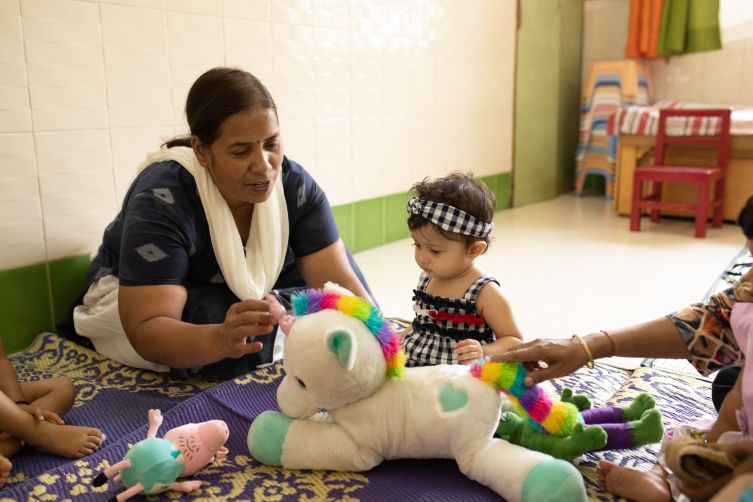
Fear of failure, fear of making mistakes is something many adults experience in one form or other. Teaching the child to deal with failure, teaching them to bounce back from mistakes is an important aspect of parenting. Same goes at Aajol preschool and daycare, where our caregivers encourage children to try.
It becomes important for parents and caretakers to be mindful of how they react when the child makes a mistake. For example, when a child spills water or milk, the parents may shout at the child, they may scold the child as an instant reaction for not being careful or for spilling, they may judge the child and call them careless or any other label, they may give the child a stern look of scolding or a look of disappointment. If this happens at a preschool and daycare caretakers could get disappointed or other children could laugh. What we do at such times repeatedly contributes to how the child’s internal dialogue builds. A child then may grow up to be an adult who scolds themselves for not being careful or who calls themselves labels such as careless or stupid or who feels disappointed in themselves for making small, genuine mistakes or for failing at something or who feels intense guilt.
At Aajol we think if we could give the child a message that it is okay to make mistakes and what’s important is to take responsibility for the mistakes and to take a problem solving approach while dealing with consequences? Then the child in our example can learn to get a cloth and clean the mess and learn to be more careful the next time.
If we could shift the focus to bouncing back and learning from the child’s mistakes and failures, that could be a powerful life skill for any child to have. Having such problem solving approach is what makes us the best preschool in Pune.
Activity: