
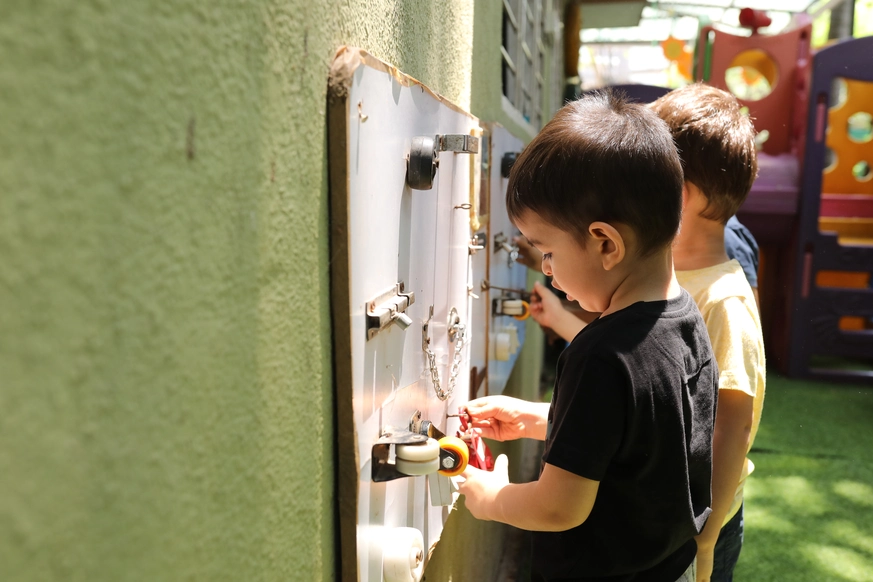
An average Indian child receives hundreds of instructions daily. Imagine receiving 600 instructions daily on what to do, when to do it, how to do it and more specifically, how not to do it. The experience may be any intensity of tiring or irritating in the least. And yurt, children endure these instructions daily. The unspoken message of receiving too many instructions is also that “you don’t know the right way to do it” or “you can’t be trusted to do it well.”
While instructions are necessary to get the flow of the routine in place and while it is absolutely important to instruct children on certain things such as actions related to developing healthy habits or to keep them out of harm’s way etc, we, as parents, also get into the habit of giving instructions. We end up giving many instructions that can also be avoided. For example, when a child gets a new toy or tries to do something new, if we allow the child the space and time to engage with the activity in their own unique way, they get the opportunity to figure out the toy or the activity. This helps them develop self-confidence which takes them a long way in life which is full of things to ‘figure out’. The child may also come up with a novel way of playing with a particular toy. This nourishes their creativity. At Aajol, a leading preschool in Pune, we have created an environment where children are given the freedom to explore and learn at their own pace. As one of the best preschools in Pune, we understand the importance of fostering independence early on. We believe that children discover things on their own, it strengthens their problem-solving skills and builds a foundation for lifelong learning.
Let’s periodically look at our habit of giving instructions and de-weed.
Activity: