
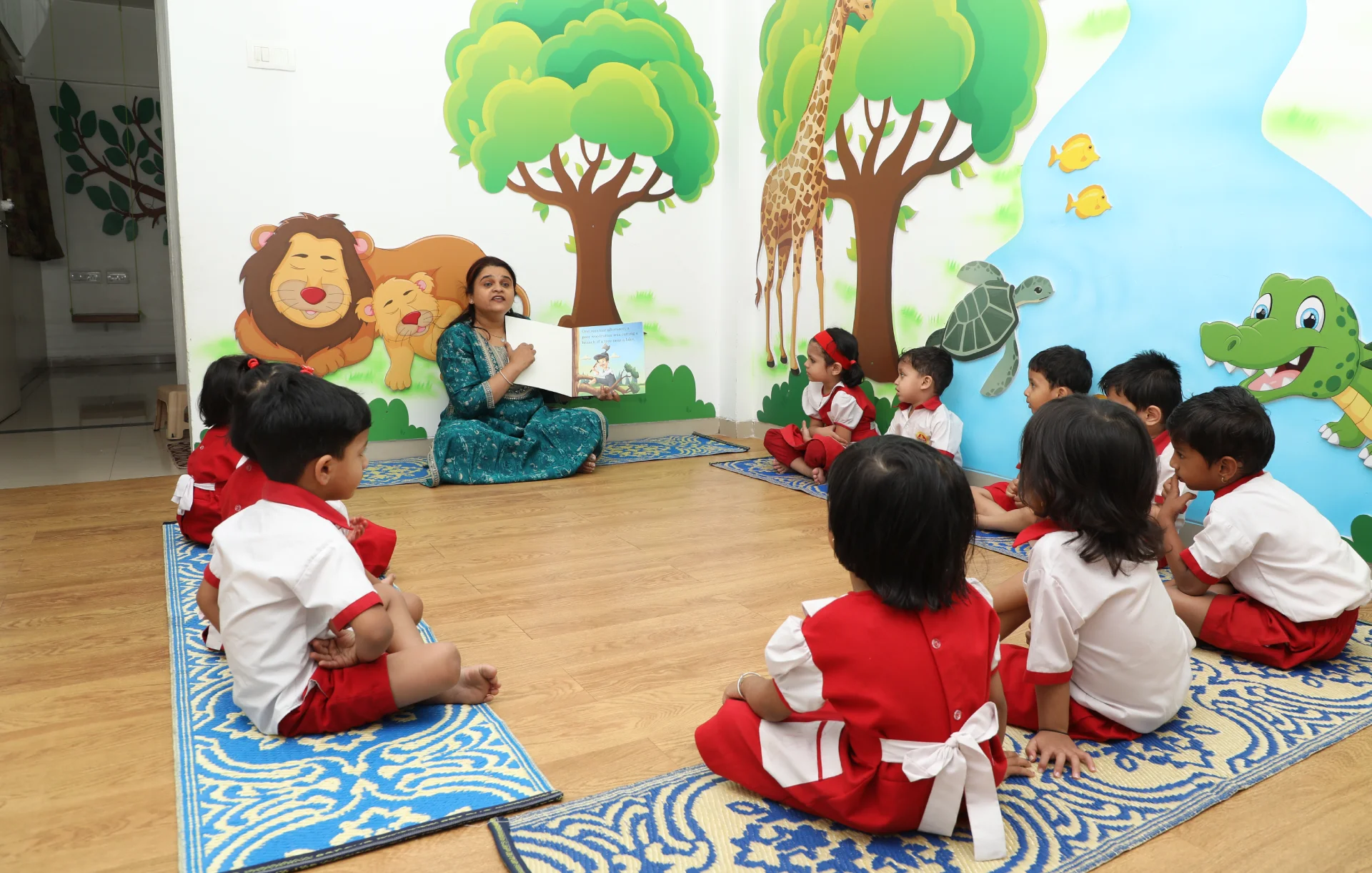
Choosing the ideal early learning environment marks a monumental step in a child’s journey, laying the foundational structures for all future academic and social success. For parents searching for the best preschool in Pune, the task often feels overwhelming, involving filtering marketing claims to find verifiable quality and commitment. The goal is to select a top preschool in Pune that not only offers stimulating preschool activities but also guarantees safety, professional excellence, and alignment with modern educational standards.
This decision requires moving beyond basic convenience (like location near home or work) and focusing on five essential pillars—non-negotiable criteria that serve as a checklist designed to assess true quality, compliance, and commitment to holistic child development.
In early childhood care, safety is the foundational element that takes precedence over facilities or curriculum. For a top preschool in Pune to be considered trustworthy, it must demonstrate explicit adherence to local safety regulations and future-proof quality mandates.
The regulatory landscape for pre-primary education in India is evolving, particularly in Maharashtra. The state government is developing comprehensive legislation, such as the proposed Maharashtra Early Childhood Care and Education (ECCE) Act, 2025. While this law is under development, a best preschool in Pune proactively aligns itself with the spirit of these quality and safety standards.
Crucially, physical safety must be verifiable through documented compliance. Parents must confirm that the school possesses valid building and fire safety certificates (NOCs). This documentation is mandatory, especially as bodies like the Pimpri Chinchwad Municipal Corporation (PCMC) have recently mandated that private schools and colleges in the region comply with fire safety norms and obtain these audit certifications . Verifying these certificates ensures the establishment is prepared for emergencies and that evacuation plans are in place.
Safety extends beyond official paperwork into daily operations. Secure access control is vital, requiring strict entry and exit policies that limit access to unauthorized individuals. Supervision is often enhanced through technology; parents should look for campuses that utilize 24/7 monitored CCTV surveillance across all key areas, including classrooms and play zones. For transparency, some institutions share a view-only feed with parents.
Health and hygiene protocols must also be stringent. High standards of cleanliness and hygiene are required, including the provision of fresh drinking water and adherence to appropriate meal policies, which typically involves prohibiting junk food. Furthermore, state standards specify the need for gender-separated, child-friendly toilets. Finally, all staff must be certified and trained in emergency health procedures like first aid and CPR, with regularly practiced emergency drills ensuring preparedness.
The curriculum defines how a child learns, interacts, and develops. The selection of a preschool in Pune should prioritize a philosophy that supports cognitive, social, and emotional growth equally.
The National Education Policy (NEP) 2020 designates early childhood education (ages 3-8) as the ‘foundational stage,’ necessitating a strong, well-rounded curriculum. Parents should explore various curriculum philosophies prevalent in the Pune market:
The curriculum should balance foundational basics (literacy and numeracy) with a strong emphasis on social skills and emotional well-being, moving beyond mere academics to ensure a truly balanced educational foundation.
A primary measure of quality is the integration of meaningful preschool activities that promote holistic development. High-quality programs explicitly incorporate socio-emotional learning (SEL). This includes activities designed to teach children how to express emotions in a safe space, resolve conflicts, build bonds, nurture empathy, and cope with disappointment . This deliberate focus prepares children for social interaction outside the family unit.
In addition to SEL, engaging cognitive activities should be apparent. These may include math and language arts focus areas such as counting with blocks, rhyming games, shape hunts, and hands-on imaginative play (such as dressing up for roles or putting on a puppet show) . Activities must be designed to build confidence and resilience, framing mistakes as necessary learning opportunities.
The individuals supervising and instructing young children significantly impact their personal and professional development. Assessing the faculty’s qualifications and the class structure is critical for identifying a top preschool in Pune.
It is essential to verify that educators are specially trained and experienced in early childhood education. State guidelines propose that teacher qualifications should meet the norms set by the National Council for Teacher Education (NCTE). Qualified teachers should not only be efficient but also passionate about working with young children, fostering a love of learning through their enthusiasm.
Furthermore, faculty must uphold an atmosphere of emotional safety. Staff should consistently provide a climate of kindness, respect, and inclusion, maintaining clear zero-tolerance policies against any form of bullying or discrimination.
A low student-to-teacher ratio is arguably the most quantitative measure of personal attention and safety. In the pre-school age bracket, children require high levels of individualized care and monitoring to feel safe and secure, and to receive timely guidance.
Industry best practices suggest that for the preschool age group (3-5 years), an optimal ratio ranges from 1:10 to 1:15. Parents should inquire about the total number of supervising adults, including both teachers and caretakers, as this factor directly influences the quality of observation and responsiveness in the classroom.
The physical environment must be designed to be both secure and stimulating, actively fostering growth and development.
The physical infrastructure of a preschool in Pune must include classrooms that are clean, well-lit, well-ventilated, and safe. All areas must be fully child-proofed, meaning furnishings and learning materials are age-appropriate, and hazards like exposed electrical outlets or cords are secured and out of reach.
Beyond the physical structure, the quality of dedicated learning zones is paramount. This includes secure, stimulating outdoor play areas, reading facilities, and activity spaces that support physical development and exploration. When assessing technology integration, parents should look for smart use—where digital tools are blended with practical learning for creativity, and leveraged transparently to share student progress.
The final pillar focuses on the crucial relationship between the school and the family. Open communication channels are key for a parent’s peace of mind.
A quality preschool in Pune establishes clear, two-way communication, providing regular updates and timely feedback regarding a child’s progress, behavior, and daily activities. This constant stream of information ensures parents remain informed partners in the educational journey.
Furthermore, a top preschool in Pune actively encourages and facilitates parental involvement. This might involve setting regular parent-teacher meetings, organizing workshops, or hosting community events. This partnership approach contributes to a thriving, supportive school community and strengthens the child’s educational outcomes.
Choosing the ideal early learning center is achieved by finding an institution that excels across all five essential pillars: verified Safety and Regulatory Compliance, a Holistic Curriculum, Expert Faculty, stimulating Infrastructure, and transparent Communication.
Before making a final enrollment decision, utilizing this expert framework for due diligence is highly recommended. Parents should always take these actionable steps:
By utilizing this comprehensive checklist, parents can confidently select a top preschool in Pune that ensures a safe, compliant, academically enriching, and joyful start to their child’s educational journey.