
What do you do when you cook something for a meal and your child refuses to eat it? Do you go ahead and ask them what they want to eat instead? Do you give them more food options that could be available? Do you ask them what can you cook for them instead? Or do you react very strongly and insist aggressively that they eat what’s made? Or do you sometimes offer options and are strict at other times?
When we are too permissive and we instantly make options available for our child, when we ONLY make the dishes our child likes and never make those which they don’t like, the child never gets the opportunity to develop their food palette. They also develop an extremely limited set of foods that they can eat, this can be of a great disadvantage in the long run. Trying different foods also helps with developing the trait of openness which is important to live an enriched life.
When we are too strict or aggressively insistent, it creates a negative association with food and nourishment for the child.
When we sometimes are permissive and sometimes strict, it creates a lot of confusion and uncertainty for the child which is adverse for the child’s wellbeing and growth.
It is important to be consistent in our approach. It is also important to have boundaries and establish them in a gentle and firm way.
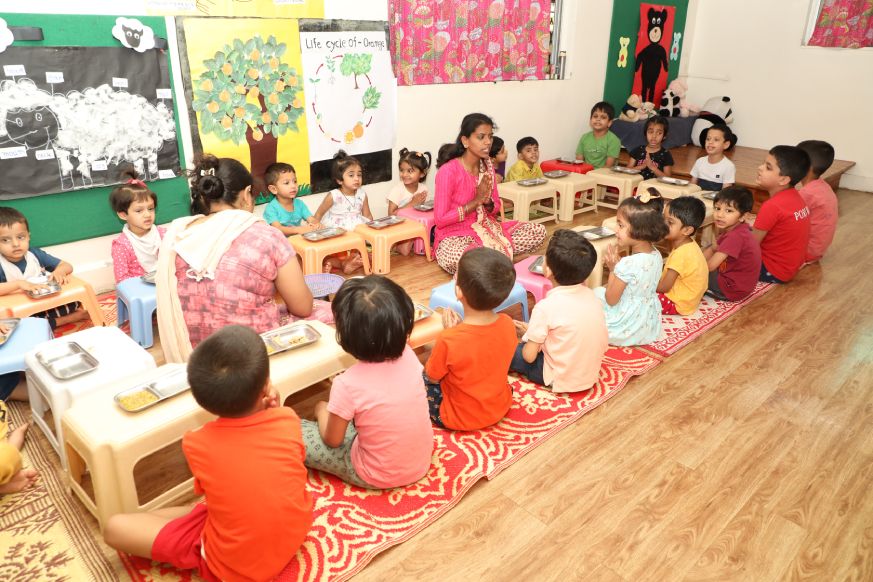
At Aajol, a trusted preschool in Pune, we see mealtimes as an important part of a child’s emotional and social development. By encouraging children to explore and eat what’s prepared, without unnecessary pressure or excessive choices, we help them build openness, flexibility, and a positive relationship with food. As one of the best preschools in Pune, we work closely with parents to create consistency between home and school, ensuring children gradually expand their food preferences in a gentle, joyful, and respectful way.
Activity:
Rather than presenting multiple options if the child refuses to eat what’s made, encourage them to eat what’s made. You may try to look for creative solutions INITIALLY such as exploring making the same vegetable in different ways until you find a way which your child likes or making the presentation attractive for the child or using songs or stories while they eat and so on.
Note: these ideas may seem time and energy consuming but once the child’s palette begins to develop, the child is more open to different foods and tastes in absence of these creative elements too.