
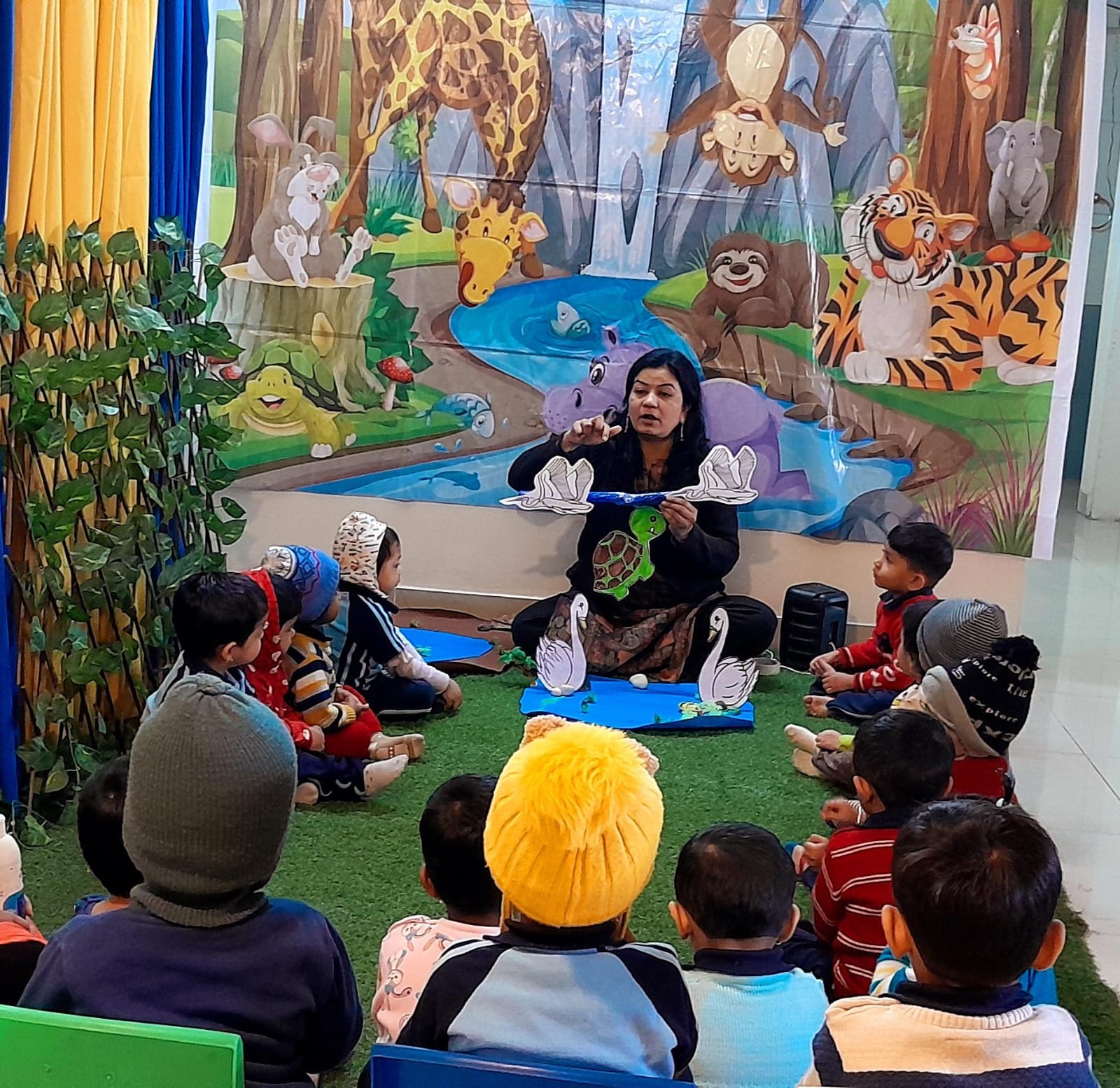
As we navigate the parenting landscape in 2026, the choices we make for our children feel more significant than ever. We aren’t just looking for a safe place to drop them off; we are looking for an environment that understands the delicate balance between academic preparation and emotional nurturing.
If you have been searching for a preschool & daycare near me, you have likely encountered the term “LearnCare.” It’s a philosophy that has gained immense traction because it refuses to choose between “learning” and “caring.” Instead, it treats them as two sides of the same coin.
Choosing a daycare school that utilizes this approach means investing in your child’s future, not just their afternoon. Here are the top five ways this philosophy prepares your child for the journey of life.
In a traditional academic setting, a child who is upset might be told to “settle down” so the lesson can continue. In a LearnCare environment, that emotional moment is the lesson.
One of the most profound benefits of LearnCare for preschoolers is the focus on emotional intelligence (EQ). Before a child can grasp phonics or numbers, they need to understand the big feelings swirling inside them. LearnCare educators are trained to help children:
When a child feels emotionally secure, their brain is physically more capable of absorbing new information. By prioritizing care, we are actually clearing the path for better learning.
There is a common misconception that “play” is just a break from learning. In the LearnCare for preschool world, play is the primary vehicle for education. However, this isn’t just random playtime; it is intentional play.
When children engage in a LearnCare-based curriculum, they are building foundational blocks for STEM and literacy without even realizing it.
By the time these children reach Kindergarten, they aren’t just “ready”—they are excited. They haven’t been burned out by worksheets; they have been energized by discovery.
We live in an interconnected world where “soft skills” like collaboration and communication are the most valuable assets a person can have. LearnCare focuses heavily on the social dynamics of the classroom.
In a daycare school that prioritizes LearnCare, children are encouraged to work through conflicts and collaborate on projects. Whether they are building a “city” out of cardboard boxes or working together to clean up after a craft, they are learning how to:
These aren’t just playground skills; these are life skills. A child who can work well with others in preschool will grow into a student (and eventually an adult) who thrives in any community.
Perhaps the greatest gift we can give a preschooler is the courage to fail. LearnCare environments are designed to be safe spaces for trial and error.
Instead of focusing on “right” or “wrong” answers, LearnCare educators praise the process. If a child is struggling to tie their shoes or finish a drawing, the teacher doesn’t just do it for them. They encourage the child to try a different way, fostering a “growth mindset.”
When a child learns that their abilities can grow through effort and persistence, they become resilient. They stop fearing challenges and start seeing them as puzzles to be solved. This resilience is a key indicator of long-term success in both academics and personal life.
Finally, LearnCare for preschoolers understands that a child’s mind is connected to their body. You cannot expect a child to thrive if they are tired, hungry, or sedentary. A top-rated LearnCare program integrates wellness into the daily routine through:
This holistic approach ensures that your child is healthy, energized, and ready to engage with the world around them. It sets a baseline for healthy habits that can last a lifetime.
Searching for a preschool & daycare near me can feel like an overwhelming task. There are so many boxes to check and so many worries to quiet. But when you find a school that embraces the LearnCare philosophy, a lot of those worries melt away.
You realize that you aren’t just finding a place for your child to stay; you are finding a partnership. You are choosing a team of educators who believe that your child’s heart is just as important as their head.
The benefits of LearnCare for preschoolers extend far beyond the classroom walls. They show up in the way your child handles a “boo-boo” at the park, the way they share their toys with a sibling, and the way they wake up every morning eager to see what the day holds.
Frequently Asked Questions
Traditional daycare often focuses primarily on “care” (supervision and safety), while traditional preschool focuses on “learning” (academics and structure). LearnCare is a modern hybrid. It treats emotional nurturing as the foundation for academic success. In a LearnCare environment, we believe a child cannot reach their intellectual potential unless they feel emotionally secure and deeply cared for.
Yes! This is what educators call “Intentional Play.” While it looks like fun to a child, every activity is designed with a goal. For example, playing with water and measuring cups is an early introduction to volume and physics. Building a tower with a peer involves negotiation, spatial reasoning, and motor skills. LearnCare turns play into a laboratory for learning.
School readiness is about more than just knowing the alphabet. It’s about “executive function”—the ability to follow directions, focus on a task, and manage emotions. LearnCare focuses heavily on these “soft skills.” By the time a LearnCare student reaches Kindergarten, they have the confidence to ask questions and the social skills to work in a group, which are the real keys to academic success.
In a LearnCare setting, the teacher is a “facilitator” rather than just an instructor. They observe each child’s interests and “scaffold” their learning. If a child shows interest in bugs, the teacher will bring in books about insects, magnifying glasses, and art supplies to explore that interest. They are also there to provide “co-regulation,” helping children navigate their big emotions with patience and empathy.
Parents often notice that LearnCare students become more independent and empathetic at home. You might see your child attempting to solve their own problems before asking for help, or using “feeling words” to describe why they are upset. These are direct results of the self-regulation and growth-mindset tools they learn at school.