


The baby’s brain develops with tremendous rapidity. This gives us opportunities to help the baby develop healthy and nourishing pathways while their brain structures develop. When humans experience intense emotions, the nervous system gets excited and gets ready to act. When those emotions pass or are dealt with, the nervous system goes back to its resting mode a
When you set out to do something or take up a task, personal or at work, do you focus on the outcome more than the process of doing the work? When you cook, do you focus more on how it would taste and whether people will like it OR do you enjoy the different smells you create and colours you see and the process of creation? When you work on a presentation, do yo
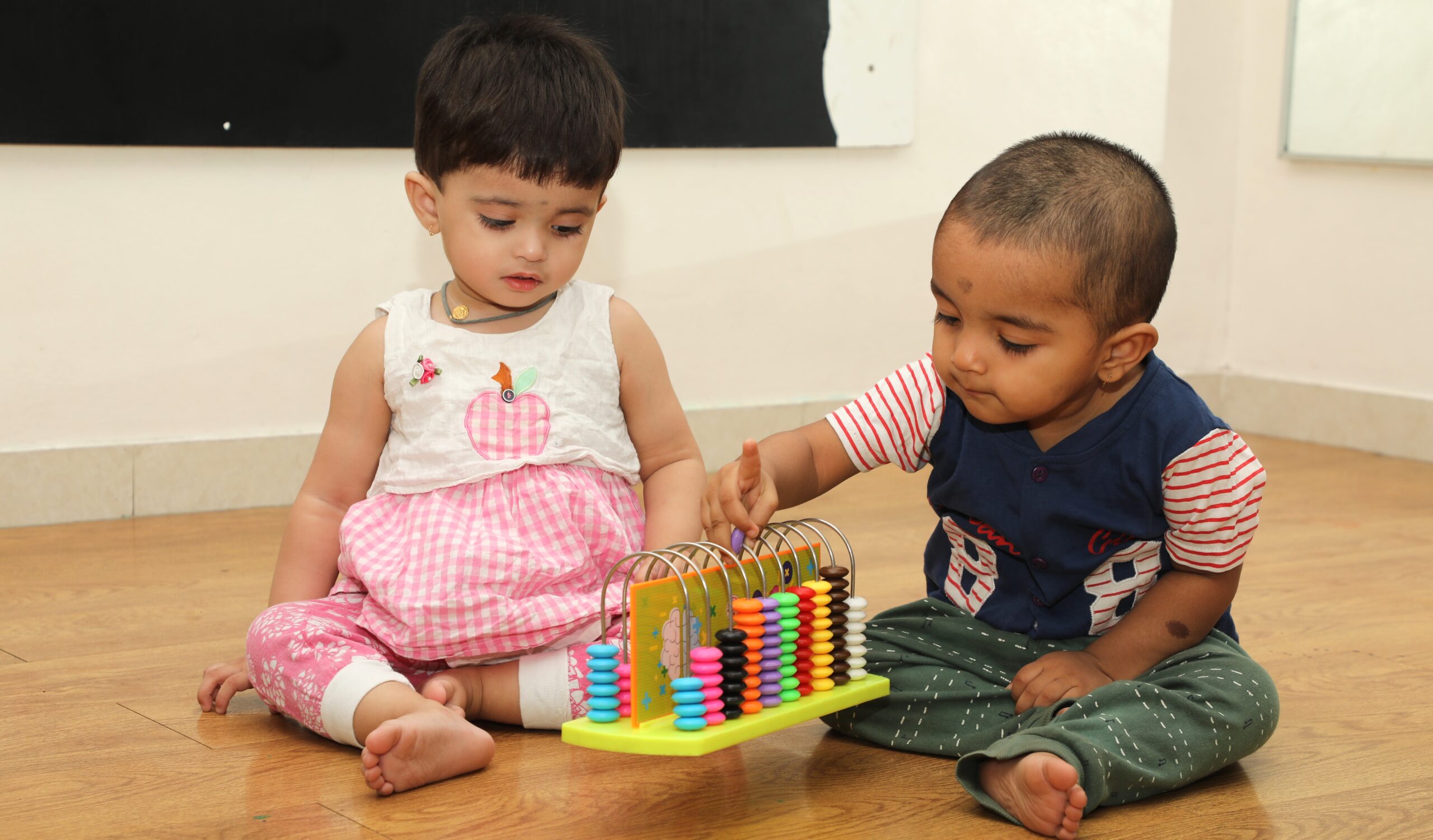
Rhythms begin for our baby as one of the earliest things to develop: the heartbeat. Then there’s a rhythmic breath, some reflexes like sucking, the rhythm of wakefulness and sleep, the rhythms of music and songs and so on which the baby accesses and enjoys. At one point, the baby begins to explore the surroundings. We soon notice that the baby repeats certain act
If the child spills water all over the bed because the child is still developing the sense of vigilance and hand eye co-ordination and if as a reaction we raise our voice to scold them, we don’t model kindness for them.. If the child cries because they can’t handle their overwhelming emotions and if as a reaction we ask them to stop crying or ‘creating a scen
Imagine that your family is gathered in the drawing room. Now imagine what would happen if your child walks in the room without wearing pants or clothes. What would you feel? How would you respond? What would people say? Many of us instinctively feel embarrassed when our child exposes or touches their private parts, especially in the presence of others. Many of us
“Stop doing this, otherwise people will laugh at you.” “See, she/he is laughing at you.” “Do you want people to laugh at you? Don’t do this then.” These and many such statements are commonly told to children. Here are a few questions. What happens if people laugh at us? What’s so terrible about it? Don’t we learn at som
“You didn’t say hi to me, now I am upset!” “You finish your food then I’ll be happy.” “Won’t you give me a hug? I’m feeling sad now!” “When you don’t listen to me, it makes me angry!” We hear these dialogues commonly being said to kids. What happens here is that the adult feels some things like being upset or happy or sa
Name all the emotions you know. Can you name more than seven? There are many shades, layers and degrees of emotions with different names to tag each. When we experience emotions, we experience a mixture of emotions. Yet the vocabulary for emotions which we have is surprisingly small. A huge aspect of emotional intelligence is the ability to identify and name

Imagine you are spending time outdoors with your child. The child runs excitedly towards a plant, happily grabs some leaves and tears them away. The child, then, looks at you with an adorable smile and throws them on the floor. How would you respond? Imagine you say a forceful “no”, even then there’s a possibility that the child does the same again, just t

What happens when your child comes to you with a problem? Usually many of us feel the urge to solve their problems. Even when our partner, friends or even parents express something that troubles them, we find ourselves looking for a solution to their troubles and many times feel free to give them those solutions too. Our loved ones may speak to us about their pr
